Which ITR Form Should an NRI File in India? UAE Guide
Confused between ITR-2 and ITR-3? This quick UAE NRI guide helps you choose the right ITR form for your Indian income.
Read the playbook →
Plain-English tax updates, audit playbooks and finance frameworks from UAE chartered accountants — Corporate Tax, VAT, bookkeeping, payroll and more.
Confused between ITR-2 and ITR-3? This quick UAE NRI guide helps you choose the right ITR form for your Indian income.
Read the playbook →
The company will recruit the employees, issue them their working papers, and take them to the UAE, but upon arrival, there is no job waiting for them. There is another company that has registered these people on paper only. Both situations deserve attention, but they should not be treated as the same offence without examining the facts. Article 60 UAE Labour Law covers several employment violations, with separate provisions for fictitious employment.The following is an analysis of the distinctions, penalties, and verifications that can be made by both the employer and employee.

This case involves the taking of the client data by a UAE guide to help you learn how employers can go about preserving evidence and estimating the financial effect of the resignation. An employee resigns and gives back the laptop, and a few days later, you discover that there is an export of a client database or forwarding of client emails to a personal account. Secure the company systems but hold onto the emails or devices that were used in stealing the information. Establish the nature of information stolen, whether it is confidential, and the law that applies.

A wrong tax figure can leave a business owner wondering whether the problem is a reporting mistake or something more serious. Understanding Tax Evasion in UAE as a topic starts with looking at what happened, why it happened and what the evidence shows. This guide explains deliberate evasion, how suspected cases may be investigated and the possible consequences. All numerical examples are hypothetical. Tax evasion involves using illegal means to reduce tax, avoid paying it or obtain an unauthorised refund. The Federal Tax Authority (FTA) can examine records and investigate reported concerns.

Failing to complete supplier verification does not, by itself, prove tax evasion. Article 54(bis) applies where the relevant supply or supply chain is connected with tax evasion. However, failure to perform the prescribed checks can cause the business to be treated as having been required to know about that connection. Specifically: where a supply is connected to tax evasion and the business knew, input VAT must be rejected. Where it should have known, the FTA may reject the deduction. Not performing the required verification can count against the business under the "should have known" test.

Buying a car through a UAE company does not automatically mean the business can recover the VAT paid on it. The key question is how the vehicle will be used and, importantly, whether it will be available for personal use. For businesses reviewing VAT on Car Purchase UAE rules, the difference between business-only use and personal availability can determine whether the input VAT is recoverable or blocked. A VAT-registered UAE business may generally recover input VAT on a motor vehicle where the normal input-tax recovery conditions are met and the vehicle is not available for personal use.

Tourists visiting Dubai, Abu Dhabi, Sharjah and other emirates often buy jewellery, perfumes, electronics, fashion products, watches and gifts. Because VAT is included in many retail prices, visitors commonly ask whether they can recover part of the tax before returning home. The answer depends on both the traveller's status and how the purchase is recorded under the UAE Tourist Refund Scheme. Paying VAT alone does not create an automatic refund right. Eligibility depends on the traveller's entry and residency status, the retailer's participation, the purchase value, the goods and timely export validation.
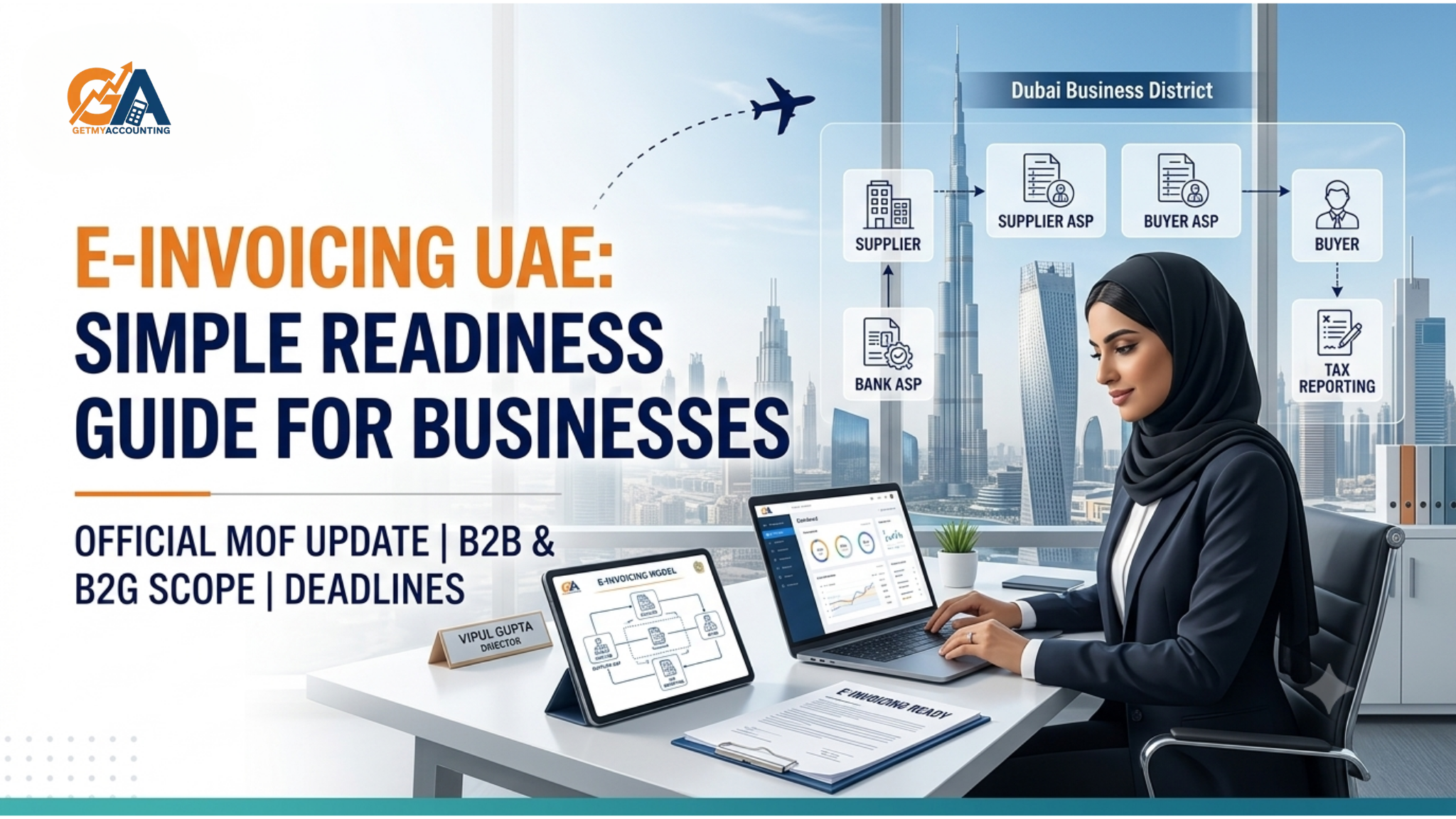
UAE e-invoicing will require in-scope business invoices to be issued, exchanged and reported as structured electronic data through an Accredited Service Provider. Mandatory implementation begins in phases from 1 January 2027, while voluntary implementation has been available from 1 July 2026. E-invoicing is becoming a major compliance and accounting change for UAE businesses. Under the UAE e-invoicing framework, the focus moves from a document that simply looks digital to structured invoice data that systems can validate, exchange and report electronically.